— INDUSTRY
Rigid packaging
We supply polypropylene and HDPE for rigid packaging, from caps and thin-wall tubs to bottles, jerry cans, IBCs and formed trays, for food, non-food consumer and industrial packs. Start from your process and what the pack holds.
APPLICATIONS


— APPLICATIONS
Rigid packaging applications
Start from the part you make. Each page explains what the part asks of the polymer and lists the grades that fit.


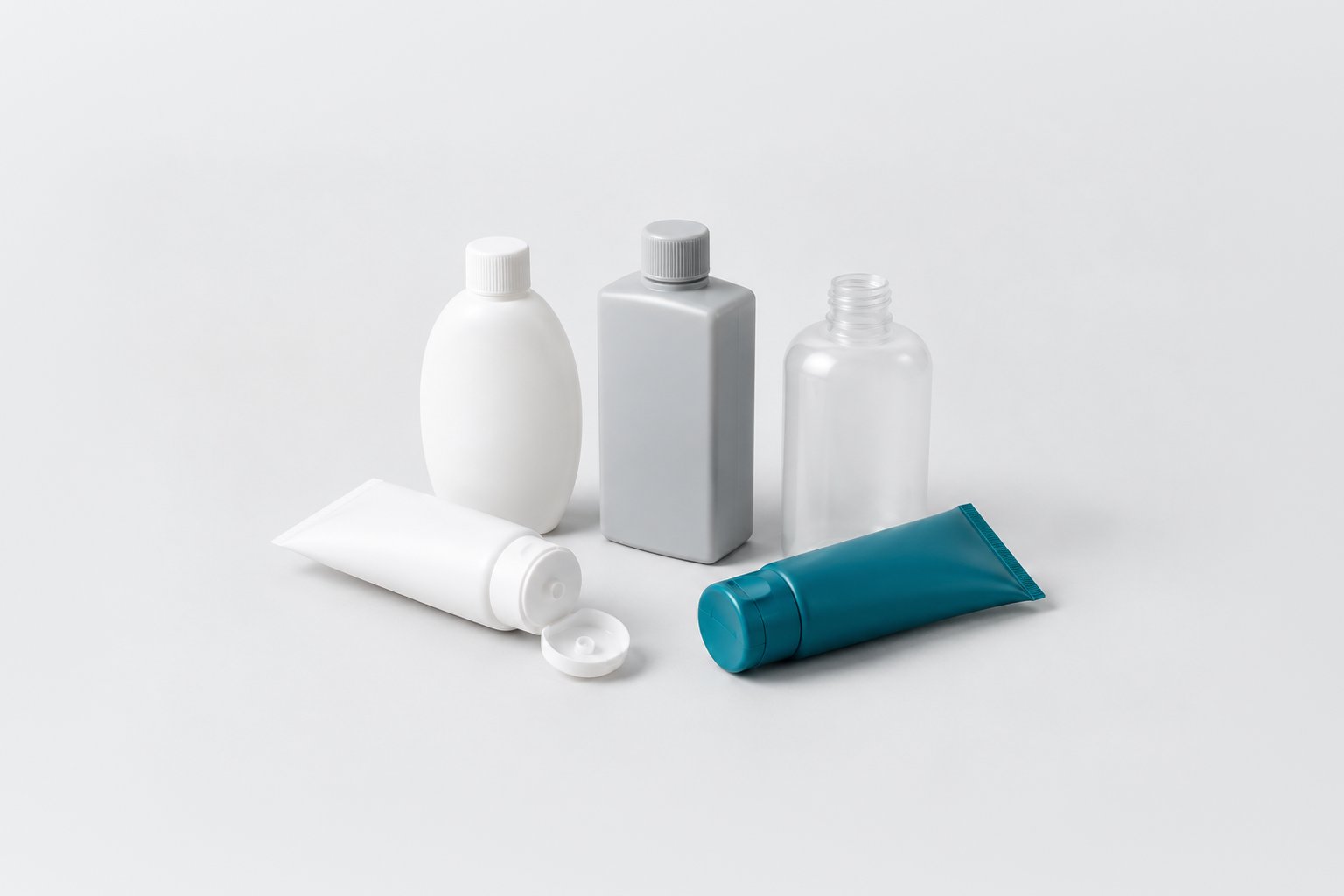


A cap that backs off leaks, a tub with an unfilled rim is reground, and a bottle that stress-cracks fails on the shelf. Each failure points to a different property of the polymer.
The process sets the melt flow. Thin-wall packaging such as food tubs, cups and lids is injection moulded from high-flow PP that fills long, thin walls in seconds. Extrusion and blow moulding need low-flow grades with the melt strength to hold a sheet or a parison, as in sheet extrusion and thermoforming. HDPE drums and jerry cans sit at the far end of the scale, in HDPE of very high molecular weight.
What the pack holds points to PP or HDPE. HDPE packaging resists stress cracking from detergents and oils, so HDPE leads for HDPE bottles, tubes and industrial containers. Polypropylene packaging is stiffer, takes living hinges and can be clarified, so it suits clear and opaque food containers and flip-top closures.
Closures add their own levers. Tethered caps and closures use PP or HDPE, injection or compression moulded. For drinks and food, low taste and odour protects the contents.
Mono-material design changes the brief. Mono-material packs, such as a PP tub with a PP lid and label, are increasingly specified. The grade then has to bring the stiffness or clarity a second material used to supply.
Within PP, the copolymer type follows the use. Impact copolymers suit packs that are frozen or dropped, random copolymers bring clarity and homopolymers stiffness. Tell us the pack and we will say which grades fit.
— AT A GLANCE
Usual polymer route per application
Caps & closures
PP or HDPE
Seal, hinge, taste and odour; compression or injection
Thin-wall packaging
High-flow PP
Fills long, thin walls in short cycles
Bottles & tubes
HDPE or PP
Stress-cracking resistance against the contents
Jerry cans, drums & IBCs
High-MW HDPE
Drop impact in the cold, stacking and ESCR
Sheet & thermoforming
Low-flow PP
Melt strength for an even sag and clean trimming
— GRADES
Grades we can supply
Grouped by polymer family. Open an application above for the shortlist that fits one part.
PP high crystallinity
AdvyForm
·
Velogy
PP
AdvyForm P1330
PP high crystallinity
AdvyForm P1330 is a nucleated homopolymer with very high crystallinity, high rigidity and high gloss. It is used for stiff injection-moulded articles.
Injection moulding
AdvyForm
·
Velogy
PP
AdvyForm E1241
PP high crystallinity
AdvyForm E1241 is a high-crystallinity impact copolymer for injection moulding. It combines processability with stiffness, impact strength and gloss.
Injection moulding
PP homopolymer
PP random copolymer
PP impact copolymer
HDPE
— PRODUCERS
Producers for this industry

— NEED HELP CHOOSING?
Not sure which grade fits?
Send us the part, what it holds and how you mould or blow it.
Every supplier of a food-contact pack before retail issues a declaration of compliance under Regulation (EU) No 10/2011: the producer for the grade, the converter for the finished pack. Cosmetics packaging is assessed in the product safety report under Regulation (EC) No 1223/2009. Containers for dangerous goods carry a UN mark for their design type, explained on HDPE drums and jerry cans.
Since 12 August 2026 every pack also falls under the Packaging and Packaging Waste Regulation (EU) 2025/40 (PPWR). Its design-for-recycling rules and recycled-content minimums start in 2030 at the earliest, and the minimums are lower for contact-sensitive packaging such as food and cosmetics packs.
— FAQ
Common questions
Start from the contents and the process. HDPE suits bottles and containers for detergents, oils and chemicals, where stress-cracking resistance matters. PP suits clear, stiff or hinged parts and thin-wall injection moulding. Closures use either, depending on how the cap seals and how it is moulded.
Yes. Tell us the application and the market, and we will request the producer's data sheet, safety data sheet and regulatory summary so they travel with the samples. For food contact, the producer's declaration of compliance for the grade comes with them.