Go back
Fibres & nonwovens
Polypropylene and HDPE for nonwovens, staple fibre, filament yarn, raffia tape, strapping, nets and monofilament. Melt flow sets the route, and stabilisation protects the product from yellowing and sunlight.
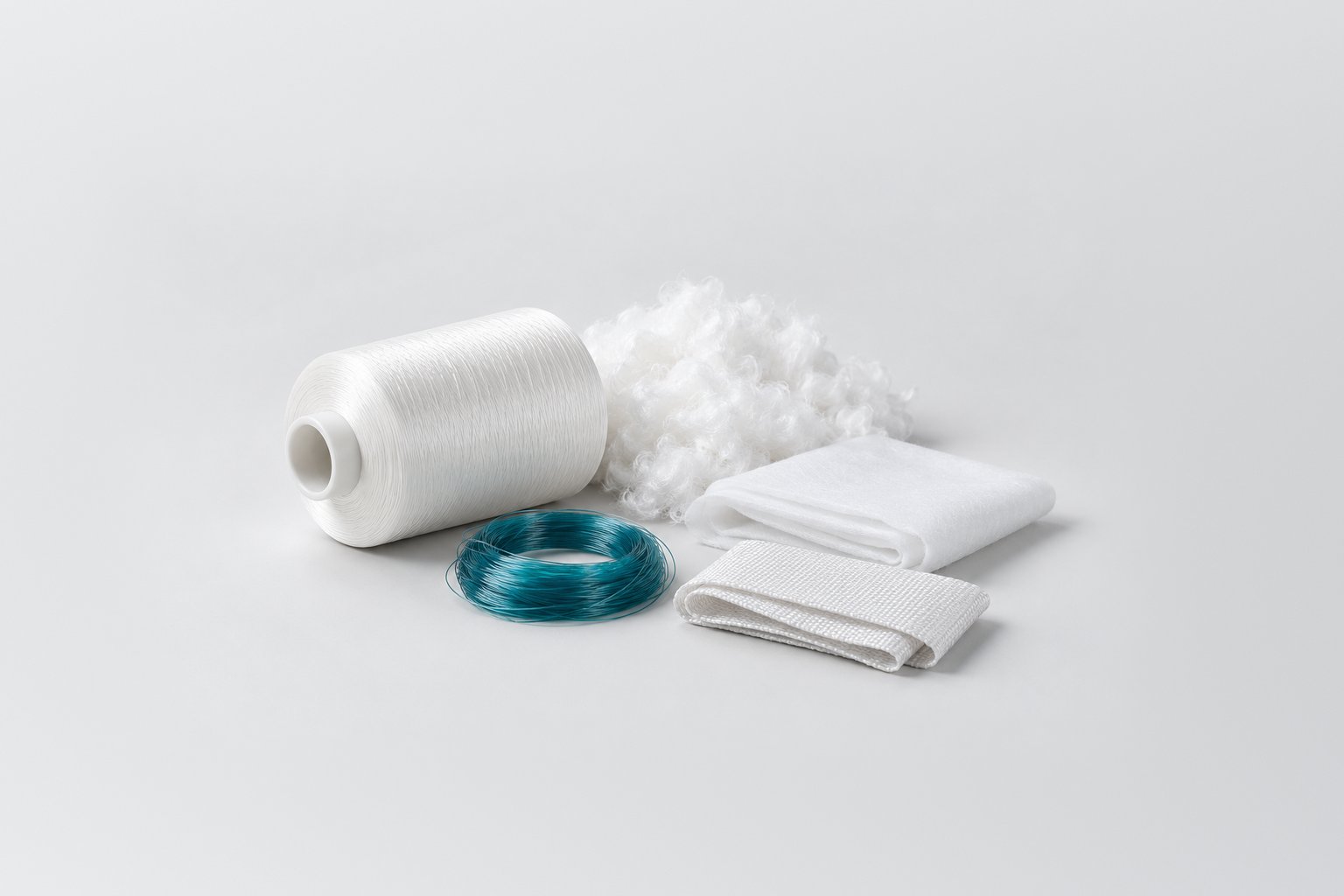
Polypropylene for fibres and nonwovens covers everything that is spun, drawn or slit before it becomes a product: meltblown and spunbond webs, staple fibre and filament yarn, raffia tape, strapping, nets and monofilament. In all of them the polymer is stretched hard, so the grade decides whether the line runs without breaks. Most choices come down to the route and its melt flow, the strength the drawn product needs, and what protects it from yellowing or sunlight. HDPE joins PP where tape and monofilament must stay soft and flexible.
What drives grade choice in fibres and nonwovens
Melt flow sorts the routes. Meltblown needs very high flow. Spunbond and continuous filament run in the tens of g/10 min (230 °C/2.16 kg). Staple fibre, tape, strapping and monofilament use lower-flow grades for strength. At every level, a narrow molecular-weight distribution keeps spinning stable.
Strength comes from the draw. Yarn is judged by tenacity at a given denier, tape and strap by tensile strength and break load, monofilament by how it holds a knot.
Stabilisation is the third lever. White fibre and webs need protection against gas fading in storage. Nets, big bags and geotextiles that live outdoors need UV stabilisation, often added by the converter as masterbatch.
Each application page goes deeper: nonwovens, fibres and filament yarn, raffia, tapes and strapping and nets and monofilament.
Documentation for hygiene products, textiles and geotextiles
Sanitary towels, tampons and wet wipes that contain plastic must carry the EU single-use plastics marking (Directive (EU) 2019/904, Article 7). Textile products such as carpets and upholstery are labelled with their fibre composition under Regulation (EU) No 1007/2011. Geotextiles for roads are CE marked by their maker against EN 13249. In each case the maker of the finished product tests and labels it. We pass on the producer's data sheet, safety data sheet and regulatory summary for the grade.
Common questions
Do you supply polypropylene for medical nonwovens?
We supply grades used for spunbond and meltblown layers. The finished mask or gown is tested to its own standard, such as EN 14683 for medical face masks. See nonwovens for how we handle the documentation.
Where do geotextiles fit?
Nonwoven geotextiles start from staple fibre or spunbond filament; woven ones from tape or monofilament. Both routes are covered on the application pages above.
Tell us your route, your line and your current grade, and we will suggest grades to trial.
Applications
Start from the part you make. Each page explains what the part asks of the polymer and lists the grades that fit.


