— APPLICATION
PP raffia and HDPE tape grades for sacks, big bags and strapping
A PP raffia grade earns its place on the stretching line. Raffia tape is slit from film, strapping is extruded as a strip, and both are then stretched to several times their length. That orientation gives them their strength. This page covers polypropylene and HDPE for woven sacks, big bags (FIBC) and strapping. It explains how flow, formulation and water carry-over decide whether a line runs steadily.

— REQUIREMENTS
What the tape has to do
A woven sack is only as strong as its weakest tape. Each tape has to reach its tenacity at the target denier without breaking on the line, and must not split lengthwise (fibrillate) on the loom. A big bag adds a lifting load at the loops, and bags stored outside need protection against sunlight. Strapping holds a pallet under tension for weeks, so break strength and creep set its specification. On every line the converter wants a steady draw, few tape breaks and even width.
— SELECTION
Choosing a polypropylene strapping or HDPE tape grade
PP homopolymer is the standard material for raffia, woven-sack tape and strapping, because it orients well and reaches high tenacity. Tape and strap grades are low-flow homopolymers. Lower flow gives a tougher strip; slightly higher flow can run thinner tape at speed.
HDPE tape grades with a narrow molar-mass distribution draw evenly and have a low tendency to fibrillate. The tape is softer and more flexible than PP and keeps good elongation, which suits nets, bale wrap and protective fabric for agriculture and building.
If your line quenches in a water bath, look for a low water-carry-over formulation. Less water reaches the stretching oven, so the tape heats and draws evenly.
Filler, colour and UV stabiliser are usually added at the line as masterbatch, matched to the sack's use and outdoor exposure. See compounding and masterbatch for carriers. Monofilament for nets is covered on nets and monofilament.
— GRADES
Grades we can supply
Grades are grouped by polymer family: PP for tape and strap, HDPE for soft tape.
PP homopolymer
KeyForm
·
Velogy
PP
KeyForm P0510
PP homopolymer
KeyForm P0510 is a polypropylene homopolymer for extrusion and thermoforming. Its additive package is designed for low water carry-over.
Film extrusion
Industries

Industrial
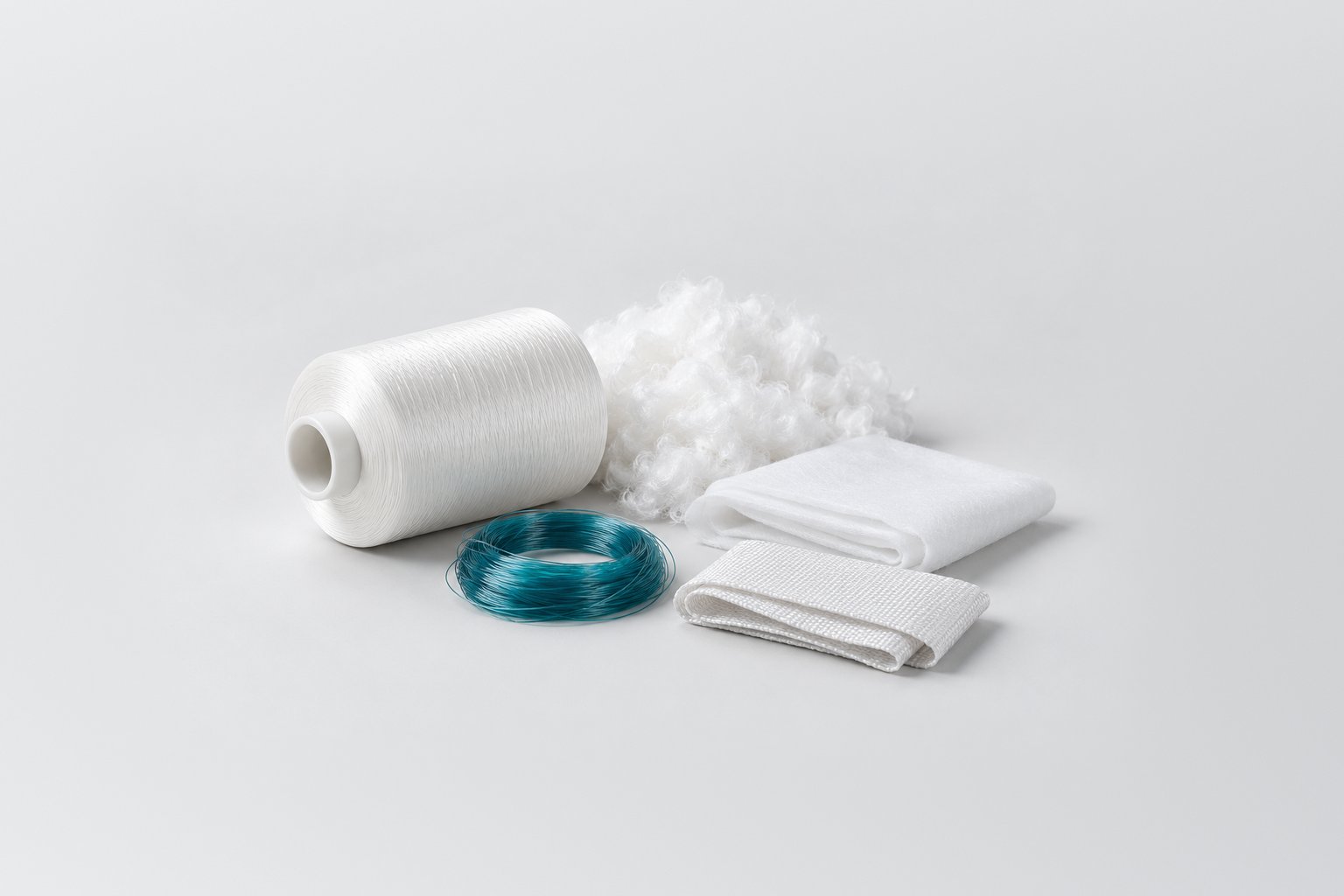
Fibres & nonwovens
KeyForm
·
Velogy
PP
KeyForm P0710
PP homopolymer
KeyForm P0710 is a polypropylene homopolymer for extrusion and thermoforming. Its additive package is designed for low water carry-over.
Sheet extrusion/thermoforming
Compounding
Film extrusion
Industries

Flexible packaging
Industrial

Rigid packaging
Fibres & nonwovens
AdvyForm
·
Velogy
PP
AdvyForm P0310
PP homopolymer
AdvyForm P0310 is a polypropylene homopolymer for extrusion and blow moulding. Its enhanced process-stabilisation package provides low water carry-over on strapping lines.
Extrusion
Blow moulding
Industries
Flexible packaging
Industrial
Rigid packaging
Fibres & nonwovens
HDPE
KeyForm
·
Velogy
HDPE
KeyForm H0520
HDPE
KeyForm H0520 is a high-density polyethylene with medium molar mass and a narrow molar-mass distribution, for tapes. It contains a lubricant.
Film extrusion
Blown film extrusion
Industries
Industrial
Fibres & nonwovens
KeyForm
·
Velogy
HDPE
KeyForm H0500
HDPE
KeyForm H0500 is a high-density polyethylene with medium molar mass and a narrow molar-mass distribution, for tapes.
Film extrusion
Blown film extrusion
Industries
Industrial
Fibres & nonwovens
KeyForm
·
Velogy
HDPE
KeyForm H0501
HDPE
KeyForm H0501 is a high-density polyethylene with medium molar mass and a narrow molar-mass distribution, for tapes. It offers very good bubble stability and processability.
Film extrusion
Blown film extrusion
Industries
Industrial
Fibres & nonwovens
— NEED HELP CHOOSING?
Not sure which grade fits?
Send us your line type, stretch ratio, target denier or strap size, and current grade.
— PROCESSING
Tape and strap lines
Raffia tape is made by flat-film extrusion and slitting, or from blown film for some HDPE tape. Strapping is extruded as a strip, quenched, stretched and often embossed. Tell us your line, stretch ratio, target denier and tenacity, or the strap size and break strength. We match grades on flow and formulation first.
Extrusion
Film extrusion
Blown film extrusion
— DOCUMENTATION
Big bags, sacks and food contact
Big bags for non-dangerous goods are designed and type-tested against EN ISO 21898. Bags for dangerous goods are flexible IBCs under chapter 6.5 of the UN Model Regulations. Either way the approval belongs to the bag design, not the resin. Sacks for sugar, flour or other food need a declaration of compliance under Regulation (EU) No 10/2011 from the sack maker. The producer's declaration for the grade, which we pass on, supports it.
— PRODUCERS
Producers for this application

Brands for this application
— FAQ
Common questions
Do you supply PP for UN-approved big bags?
Why does water carry-over matter?
PP or HDPE tape for woven fabric?
— RELATED


